
Beyond the Backpack: 4 Ways to Nurture Your Child’s Growth at Home This Year

As we settle into the rhythm of a new school year, the focus often turns to the logistics: backpacks, shoes, and schedules. But at Pinyon Montessori, we know that the most profound support you can offer your child isn't found in a checklist—it’s found in the quiet, consistent ways you nurture their confidence and connection at home.
Beyond the daily preparations, here are four subtle but powerful ways to support your child’s emotional growth and independence this year.

1. Creating an "After-School Decompression" Zone
We often underestimate how much "holding it together" a child does throughout the school day. Between navigating social dynamics, managing their own work cycles, and following community agreements, their "emotional gas tank" is often empty by the time they reach you.
The Tip: Resist the urge to pepper them with questions the moment they get in the car or walk through the door. Instead, offer a "Decompression Window." Provide a healthy snack and 20 minutes of low-pressure time. Let them listen to music, play in the dirt, or just sit quietly. You’ll find that when they are ready to talk, they will—and the quality of that conversation will be much deeper.
2. Refining the "Goodbye" Ritual
The morning transition can set the tone for the entire day. Sometimes, as parents, we linger because we are feeling the separation, too. But children are masters of reading our energy. If the departure is long and drawn out, the transition feels heavy and uncertain.
The Tip: Create a consistent, quick, and loving "Goodbye Ritual." It could be a specific three-finger wave, a secret high-five, or a quick poem. Keep it short and predictable. By making your goodbye confident and brisk, you are signaling to your child: "You are safe here, I trust this community, and you are ready for your day."
3. Move Beyond "How Was Your Day?"
We all want to know everything about their day, but "How was school?" is a massive, overwhelming question for a child. It’s too big to answer, so they usually default to "Fine."
The Tip: Swap the generic question for specific, curiosity-driven inquiries that invite them to share their internal world. Try:
"What was the most interesting thing you saw a friend do today?"
"Did you have to solve any tricky problems today?"
"What was a moment today where you felt really proud of yourself?"
These questions help them reflect on their day as a series of small, manageable moments rather than one giant event.
4. Cultivating a Space for Agency
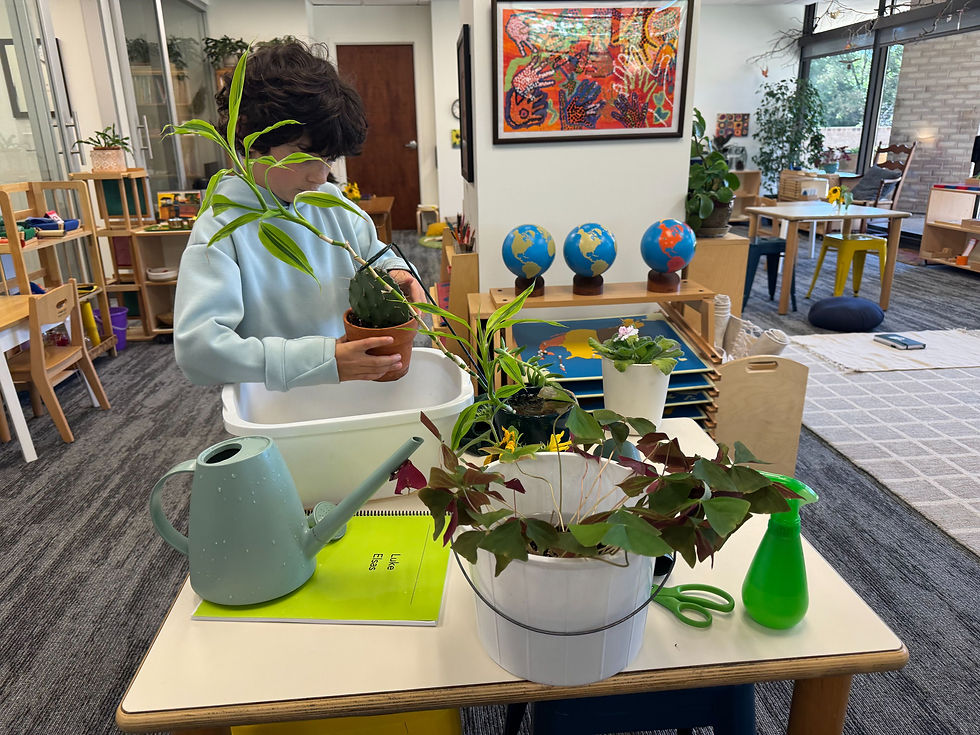
One of the best ways to support your child is by carving out a space where they can exercise agency. Our classrooms are designed to be explored and utilized, but home can sometimes be a place where children hear "don't touch" or "be careful."
For our Early Childhood children: This looks like a "Yes Space"—a small corner or low shelf filled with puzzles, art supplies, or books they are free to use whenever they like, without needing permission. When they have a space where they are in total control, they feel a sense of autonomy that mirrors the empowerment they feel in our classrooms.
For our Elementary students: This looks more like an "Autonomous Work Zone"—a dedicated spot with the tools they need to pursue their interests, manage a personal project, or simply reflect. Whether it’s a desk for their inventions, a quiet corner for their reading, or a shelf for their home "work," having a space where they are in control helps them practice managing their own time, energy, and focus.
The Work We Do Together
The best part of a Montessori education is that it doesn't end at the classroom door. By cultivating these small rhythms at home, you aren't just making your evenings easier—you’re mirroring the respect, trust, and independence we are fostering here at Pinyon.
We are so grateful to be partners in this village with you.
— Margaret & Brandi


Comments