
The Grace in Everyday Work: Reflections on Practical Life

When people think about educational success, conversations often jump straight to reading levels, early math benchmarks, and executive functioning skills. But as Montessori educators, we know that true growth begins in a simpler, much deeper place: Practical Life.

A Teacher's Perspective: What We See in the Classroom
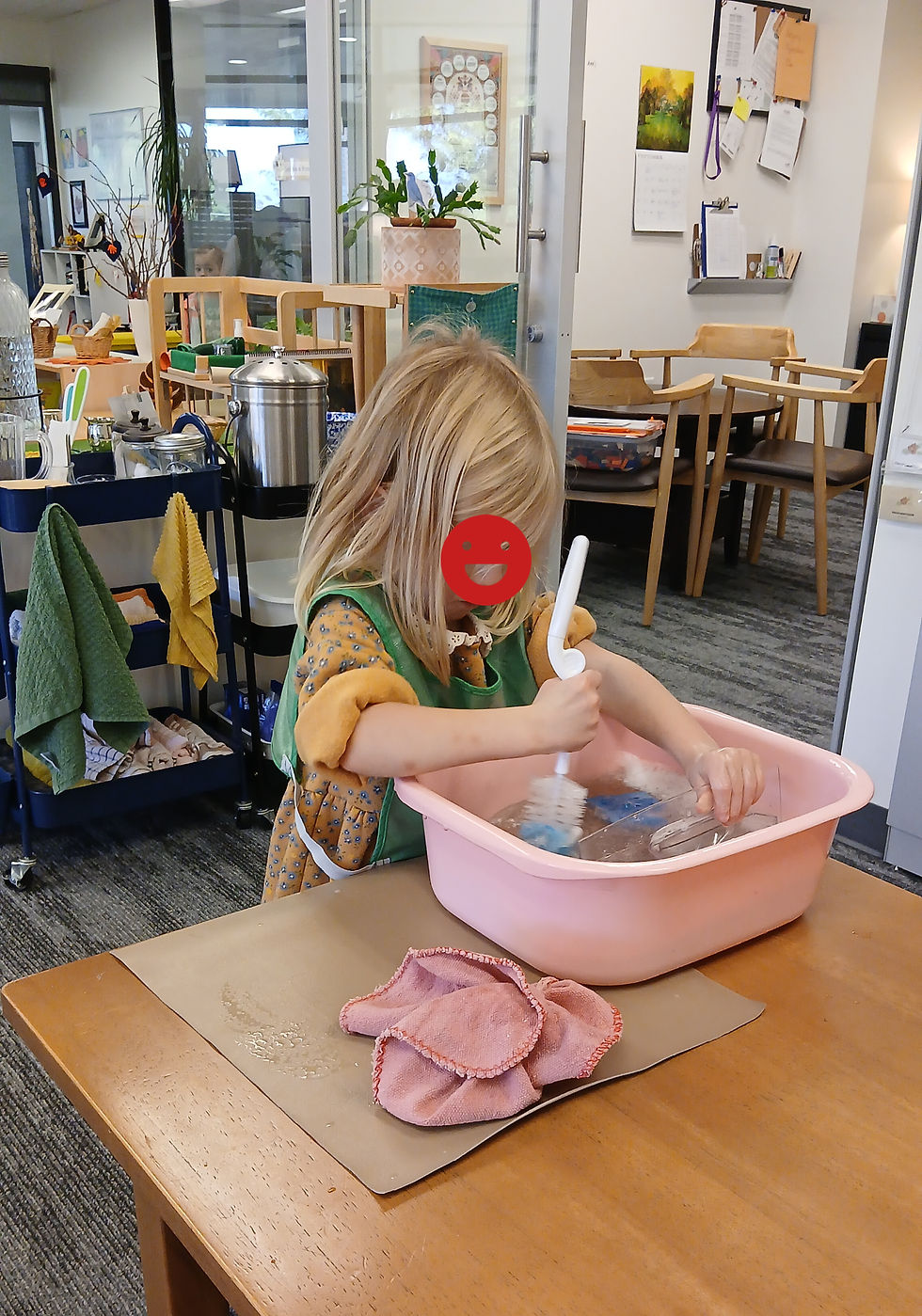
Scrubbing a table or carrying a pitcher may look like basic cleanup, but Montessori guides see children building inner purpose, concentration, and coordination through these multi-step tasks. Practical Life activities provide achievable work cycles that instill self-trust. Saying "I can do this myself!" gives children the confidence to embrace academic challenges with excitement.
At Pinyon Montessori, we celebrate the Practical Life curriculum as a foundation of purposeful learning and self-discovery. Practical Life offers children rich opportunities to:
Refine physical coordination: Building fine motor control, spatial awareness, and natural grace.
Follow logical sequences: Developing the ordered thinking essential for complex problem-solving down the road.
Cultivate deep focus: Entering a state of peaceful flow that naturally lengthens attention spans.
Practice independence: Building true autonomy, confidence, and self-regulation.
Repeat with purpose: Honoring their natural drive for mastery without external pressure or judgment.
Experience intrinsic pride: Feeling the quiet joy and satisfaction that comes from completing real, purposeful work.

Homegrown happiness: A kid and his freshly picked corn! 🌽✨
Try This at Home: Bringing Practical Life into Your Family Rhythm
Children often prefer real household work over toys, and you don't need special Montessori materials to include them. Simple daily ideas include:
Accessible drink station: Place a small pitcher and child-sized glasses on a low fridge shelf.
Meal prep involvement: Let them wash veggies, cut soft fruit with a child-safe knife, or tear salad greens.
Mini cleaning kit: Offer a small dustpan, broom, and cloths for cleaning minor spills.
Embrace progress over perfection: Slowing down and giving children extra time to complete tasks at their own natural pace builds confidence and independence.
When we invite children into authentic work—both at school and at home—we aren't just teaching them to care for their environment. We are nurturing resilient, self-motivated, and mindful learners who are ready to embrace the world.


Comments