
The 'Why' Behind the Rules: How We Create a 'Yes' Environment

Updated: 3 days ago
When people hear the Montessori term "freedom within limits," they often picture a binary: either strict, military-style order or total, glitter-covered chaos. But in an authentic Montessori classroom, boundaries aren't brick walls meant to lock children in—they are guardrails designed to let them run safely.

A "Yes" environment isn't about lawlessness; it's about intentional design. By replacing arbitrary, adult-imposed "don'ts" with clear, values-based agreements—like walking slowly to keep friends safe or treating materials with care so they are ready for the next person—we shift the culture from obedience to empowerment. Instead of policing behavior, guides cultivate internal self-regulation. When children understand the genuine why behind an agreement, compliance transforms into mutual respect and genuine ownership of their community.
Busy? Here's the 1-Minute Takeaway
A "Yes" environment trades rules for trust—turning boundaries into invitations for kids to learn real self-control.
Safety & Freedom: Clear, thoughtful limits give kids the security they need to explore with confidence.
Values Over Compliance: When we share the "why" behind rules, kids build genuine empathy instead of just following orders.
Inner Motivation: Taking care of their space builds real pride and lifelong self-discipline.
Try this at home: Turn one "No" into a positive "Yes." Swap "Don't run!" for "Let's use our walking feet inside to keep everyone safe."
Early Childhood (Ages 3–6): Foundations of Choice & Care
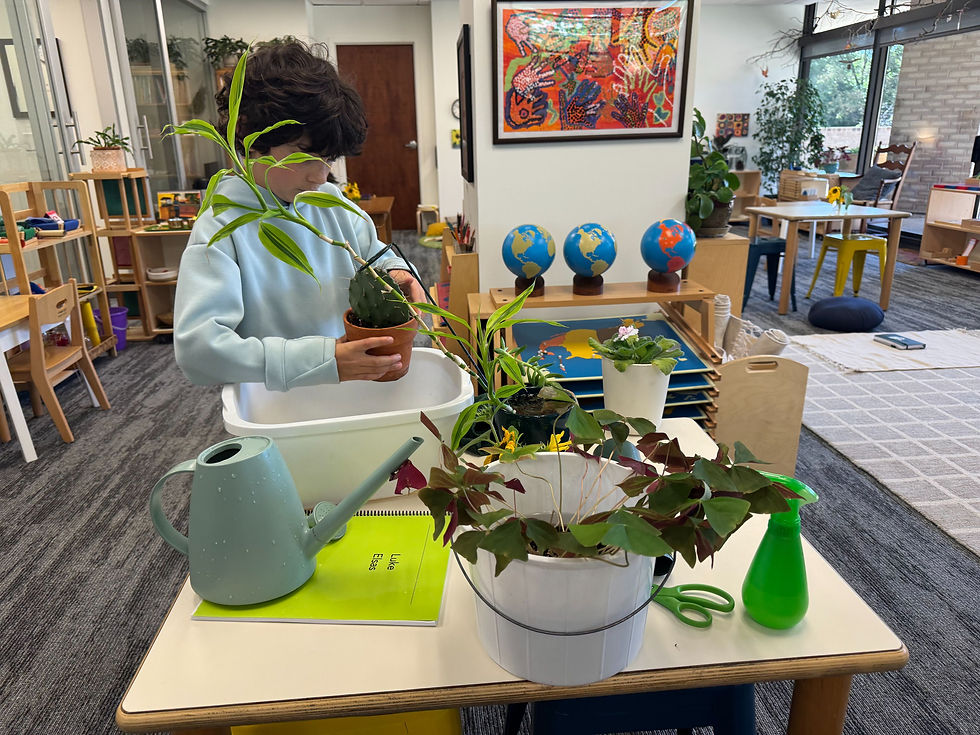
For our youngest learners, boundaries look like physical freedom with gentle order. A three-year-old learns that they are entirely free to choose any work off the shelf, take it to a rug, and focus for as long as they like—provided they treat the material with respect and return it ready for the next friend. The "limit" isn't a restriction; it's the very structure that protects their focus and builds intrinsic self-regulation.
Elementary (Ages 6–12): Social Agreements & Shared Responsibility
As children enter the elementary years, their social worlds explode. Here, "freedom within limits" evolves into collaborative governance. Elementary students co-create classroom agreements, run community meetings, and navigate peer conflicts using structured grace-and-courtesy protocols. They test boundaries not to break them, but to understand fairness, justice, and their personal impact on the group.
Pinyon's Continuum: Our Inclusive Village in Action
What makes Pinyon truly special is how our ages 3–12 continuum blends throughout the day. Our older elementary students serve as reading buddies, sidewalk mentors, and peaceful conflict mediators for the younger children. Meanwhile, our 3-year-olds observe the bigger kids with awe, absorbing advanced social modeling and academic curiosity naturally. It’s an inclusive village where leadership isn’t taught from a textbook—it’s lived daily through empathy, mentorship, and shared community responsibility.
Ready to Step Into Your Child’s Shoes?
Reading about a "Yes" environment is one thing—experiencing it is a whole other story! Join us for our upcoming Silent Journey & Discovery event. Spots fill up quickly—reserve your seat today and see what Pinyon Montessori learning feels like!


Comments